
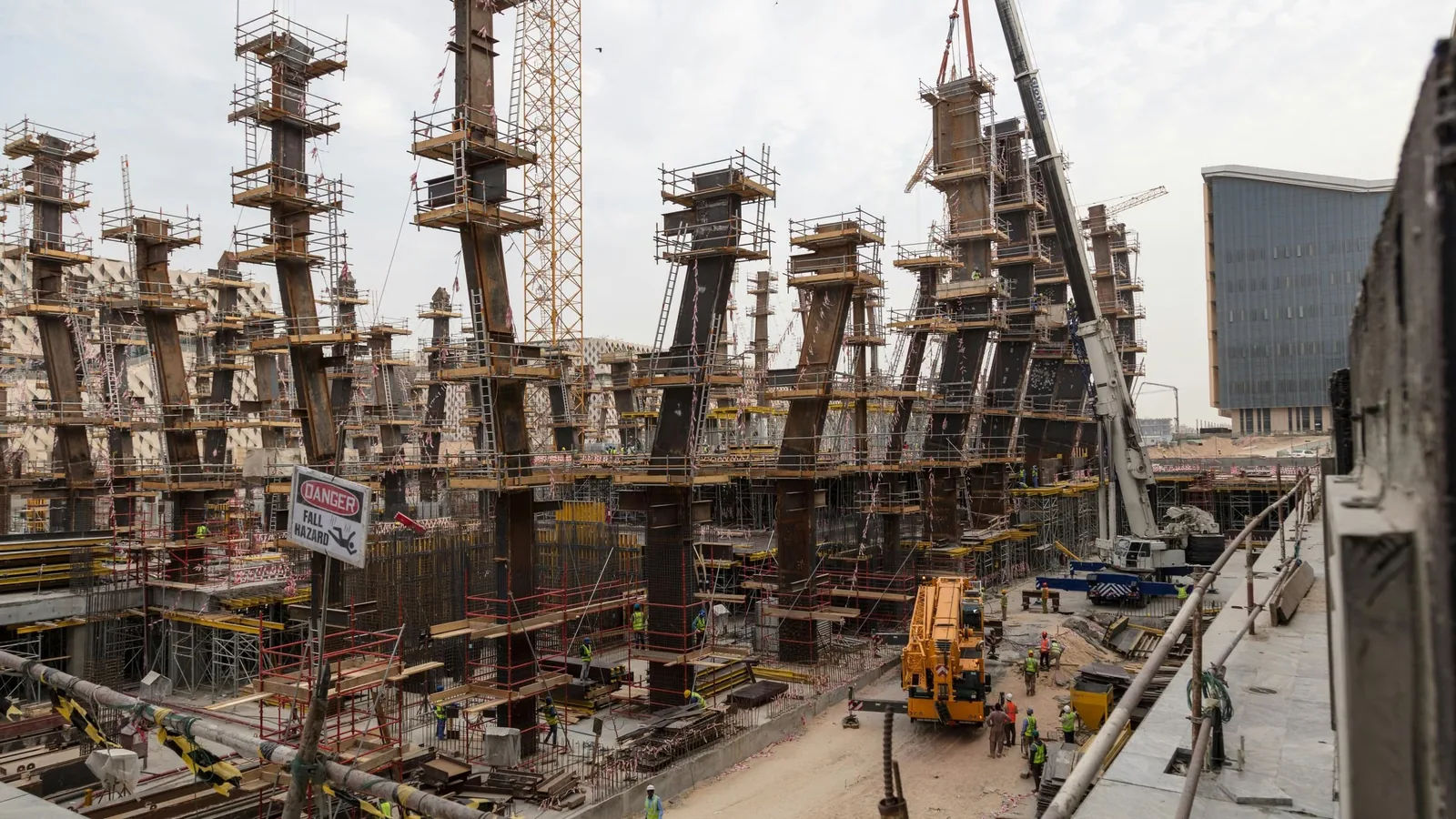
PCL Construction, a national contractor, needed advanced safety and security monitoring on an active hospital redevelopment site — one of the more demanding environments a camera system can be asked to work in.
We deployed AI-powered cameras across the site, enabled licence-plate recognition and hard-hat and PPE detection, and delivered 360-degree coverage, so compliance is monitored continuously rather than by manual spot check.
PCL required advanced safety and security monitoring across an active hospital redevelopment site. That phrasing covers two distinct jobs. Security concerns who and what comes onto the site. Safety concerns what happens to the people already on it. Conventional camera systems are reasonable at the first and close to useless at the second, for a structural reason: they record, and recording is a way of finding out what happened after it happened.
Protective equipment compliance illustrates the gap. On a large site, PPE is verified by supervisors observing people, so compliance is sampled rather than measured. The sample is taken where supervisors happen to be, at the times they happen to be there. Footage from a conventional system does not close that gap: it holds the evidence, but nobody watches hours of video to discover whether someone crossed a slab without a hard hat, so in practice the evidence is reviewed only once an incident has already made it relevant. Vehicle movement raises the same question at the boundary, where deliveries, subtrades and plant arrive continuously.
Three decisions, each about turning video from a record into an input.
The cameras classify what they see rather than simply capturing it, and that distinction is the whole project. A camera producing footage needs a person to extract meaning from it. A camera producing detections generates information continuously, whether or not anyone is looking at a screen. On a site of any size that is the difference between a system participating in daily operations and one that only matters afterwards.
PPE detection applies the same check everywhere the cameras see, all the time, without the sampling problem manual observation cannot avoid. Licence-plate recognition does the equivalent job at the boundary: vehicle identity is captured as structured information at the moment of movement rather than left inside footage to be recovered later if somebody asks.
Detection is only as good as the field of view, and a gap in coverage is not a partial answer but an absence of one. Coverage was designed so the site is seen in full rather than at the points where mounting happened to be convenient — which matters more on a redevelopment, where the geometry of the work area changes as the build progresses and yesterday's clear sightline becomes today's blind corner.
Both, which is the point of doing it on one platform. The cameras giving you licence-plate recognition at the gate are the same infrastructure giving you PPE detection on the deck. Buying two systems to do those jobs separately is a common and avoidable expense.
No. It replaces sampling. A supervisor's judgement about why something happened, and what to do about the person involved, is not something a detection model produces. What the system removes is the assumption that compliance observed in one place at one time represents compliance everywhere.
Because the surrounding facility keeps operating. Sites adjacent to live healthcare have less tolerance for uncontrolled access and less room for the informality a greenfield site can absorb.
If you already have cameras on your sites, the question is not whether you have coverage. It is what your system produces. A system producing footage has one real use case, which is investigating something that already went wrong. A system producing detections can be used to run the site while the site is being run. Those are different products that look identical in a brochure and cost roughly the same to install.
Nearly every safety process on a site is a sample: a walk, a spot check, a scheduled inspection. Samples are estimates whose accuracy depends on where the observer went. Automated detection changes what supervisors are told before they decide where to go. Finally, plan coverage against the site as it will be, not as it is on installation day — a redevelopment reorganizes itself continuously, and holes in a detection system are worse than holes in a recording system, because a detection system is trusted.
Related: construction IT services and security cameras.
If you are specifying site cameras for a project and want to know what AI detection genuinely adds — and where it does not — ask us before the order goes in. Call 647-476-5259.
%20(1).avif)
%201.avif)





