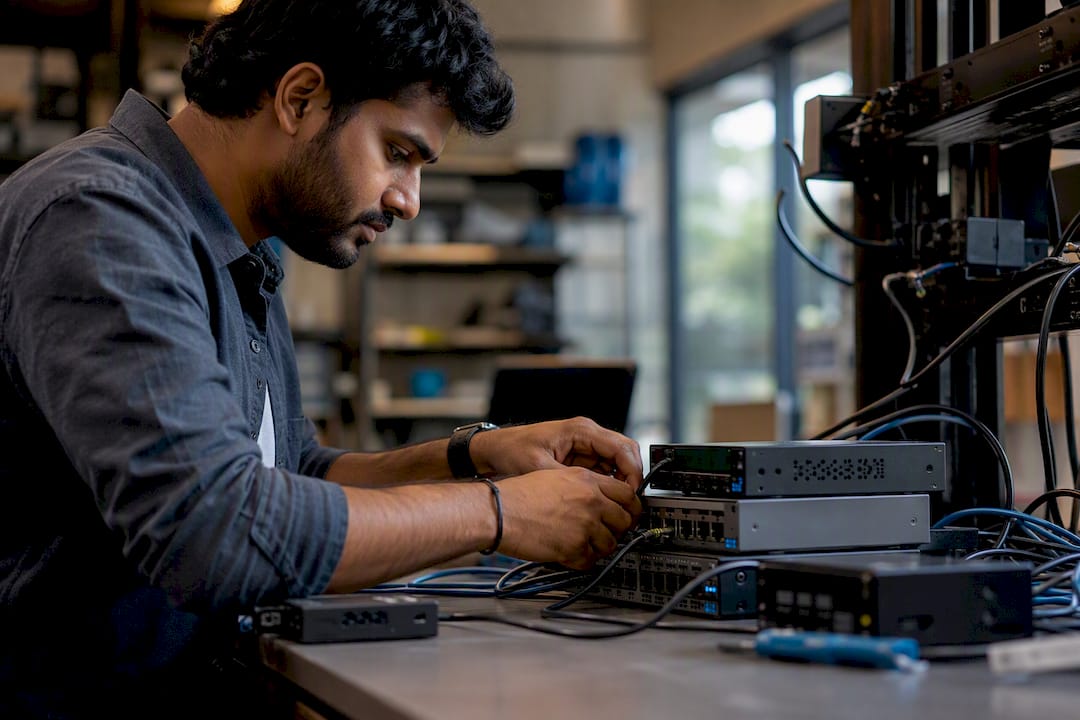
SOC 2 Type II is an independent CPA attestation confirming your security controls operated effectively over a defined period, not just that they looked good on paper the day someone drafted the policy. The audit follows the AICPA’s Trust Services Criteria, and “Type II” specifically means the auditor tested how your controls actually behaved across an observation window, commonly three to twelve months, instead of checking them once.
For business owners and IT managers, this distinction has real teeth. Enterprise procurement teams increasingly treat a current SOC 2 Type II report as a gatekeeping requirement before they’ll sign a vendor contract, which means a stalled or missing report can quietly slow your entire sales pipeline.
SOC 2 Type II proves your security controls operated effectively over months, not just that they were designed correctly on paper.
| Point | Details |
|---|---|
| Type II tests operation, not design | Auditors sample evidence across a 3–12 month observation window to confirm controls actually ran. |
| Security criterion is mandatory | Availability, processing integrity, confidentiality and privacy are optional and should match real customer commitments. |
| Automation shortens readiness only | Tooling speeds up evidence collection but cannot compress the required observation window. |
| Exceptions rarely mean failure | A qualified opinion with a clear remediation plan is often still acceptable to procurement teams. |
| Scope deliberately from day one | Over-scoping adds audit cost and risk without improving how buyers perceive your report. |
A Type II report is built around five possible Trust Services Criteria, and the AICPA requires only one of them: Security. The other four are optional, added only when they reflect a genuine commitment you’ve made to customers.
Adding criteria you don’t need is a common misstep. Layering on Availability or Processing Integrity without a matching customer commitment adds audit scope and cost with no real business payoff, since auditors still have to test controls tied to that criterion whether or not it moves the needle for your buyers.
Statistic to remember: the observation window behind a Type II report typically runs three to twelve months — there’s no shortcut that compresses that timeframe, no matter how mature your tooling is.
Beyond the criteria, every SOC 2 Type II report contains four core components. The management assertion is your organization’s own written claim about what controls exist and how they’re designed. The system description lays out the boundaries of what was actually audited, including infrastructure, software, people and data flows. The auditor’s opinion is the verdict itself, and it comes in four flavours: unqualified (a clean pass), qualified (mostly fine, with noted exceptions), adverse (controls failed), or a disclaimer (the auditor couldn’t gather enough evidence to form an opinion). Finally, the testing matrix lists every control tested, the sample size used, and any exceptions found.
That testing matrix is usually what a savvy procurement reviewer reads first, because it shows exactly where things slipped. One quirk worth knowing: SOC 2 reports are never posted publicly. They’re distributed under NDA, typically shared during vendor due diligence rather than sitting on a public trust page the way a SOC 3 summary might.
The difference between SOC 2 Type I and Type II comes down to one question: are controls just designed correctly, or do they actually work over time? Type I is a point-in-time snapshot confirming your controls are designed appropriately as of a specific date. Type II goes further, testing whether those same controls operated effectively across the entire observation period.
Many organizations run Type I first, since it can be completed in a matter of weeks and gives them an early signal before committing to a longer Type II engagement. But a Type I report alone rarely satisfies serious buyers. Enterprise procurement teams generally require Type II because it demonstrates operating effectiveness rather than a one-day design check, and a design snapshot doesn’t tell a buyer much about whether your access reviews actually happened every quarter.
| Scenario | Typical fit |
|---|---|
| Early-stage startup, first enterprise prospect | Type I to start, Type II within the year |
| Mid-market SaaS selling to larger customers | Type II, often required contractually |
| Established vendor renewing enterprise contracts | Type II, renewed annually without gaps |
The decision usually isn’t really a choice at all once you’re selling into larger accounts. A startup with a handful of small clients might survive on Type I for a year while it builds evidence history. A mid-market company competing for six-figure contracts almost never gets the option. If your prospective customer’s security team asks for a report and all you have is Type I, expect a follow-up question about when Type II is coming.
The audit unfolds in four distinct phases, and understanding the sequence helps you set realistic expectations with your leadership team and your sales pipeline.
The full timeline varies by organizational maturity, but the observation window is fixed by design. Compliance automation platforms can meaningfully shrink readiness time by pulling evidence automatically instead of manually screenshotting logs every week, but they cannot compress the observation window itself. Auditors need to see months of real operating history, and no amount of tooling changes the calendar.
Pro Tip: Start your observation window as early as realistically possible, even if a few controls aren’t perfect yet. A messy first quarter with documented remediation reads far better to an auditor than a pristine six weeks that conveniently ends right before fieldwork.
Auditors don’t take your word for it. They pull specific artifacts and check them against what you claimed in your system description, and knowing what they’ll ask for ahead of time saves a lot of last-minute scrambling.
Access control evidence tends to draw the most scrutiny. Auditors want MFA logs showing enforcement across your systems, provisioning and deprovisioning tickets proving accounts were created and removed on schedule, and quarterly access review records showing someone actually checked who still needed access to what.

Change and deployment evidence comes next. This includes change tickets tied to every production deployment, code review artifacts showing a second set of eyes approved the change, and CI/CD approval logs demonstrating your pipeline enforced that review before code shipped.
Monitoring and logging evidence covers centralized log retention (often through a SIEM), documented retention policies, and records showing your team actually triaged the alerts that fired rather than letting them pile up unread.
Rounding out the list: patch and vulnerability scan records, backup verification logs proving restores were actually tested, and incident response tickets with clear timelines from detection to resolution.
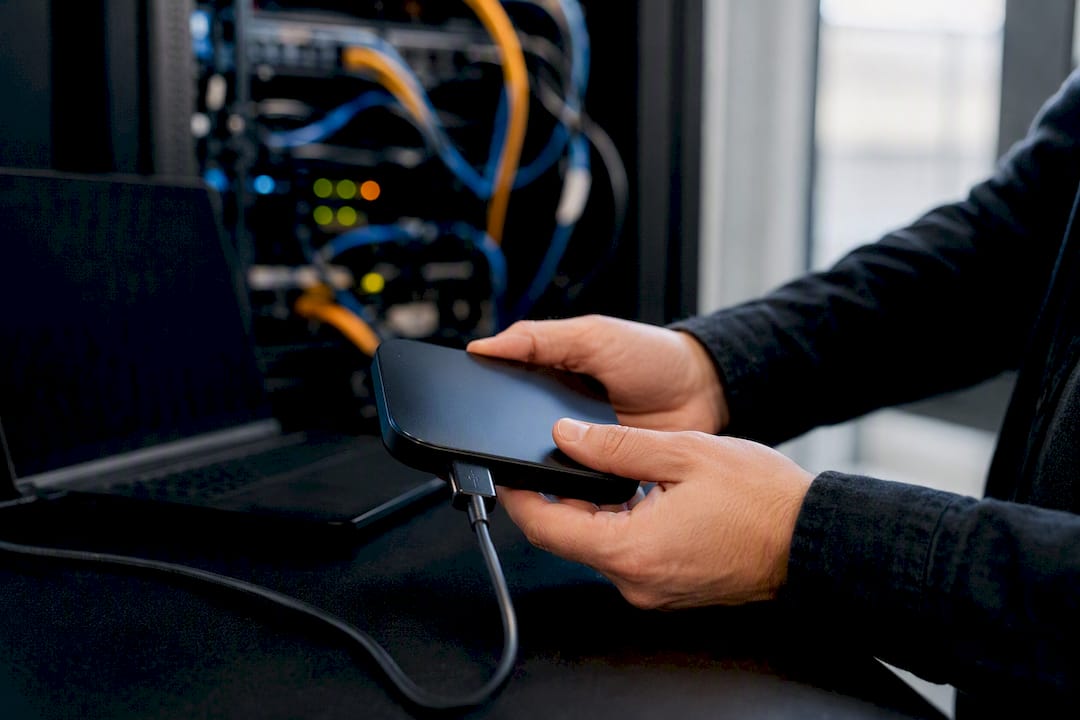
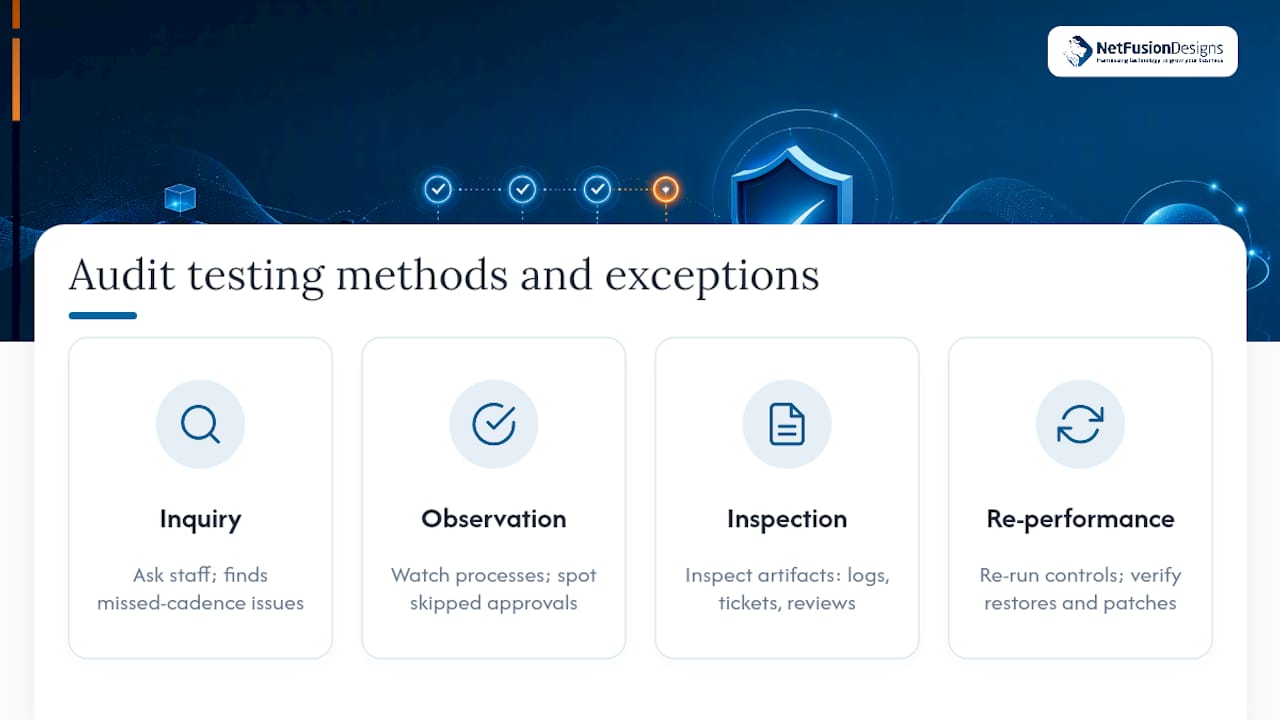
Auditors test this evidence through inquiry, observation, inspection and re-performance, and the most common exception isn’t a dramatic security failure. It’s a missed cadence, like a quarterly access review that happened three times instead of four, or a change that skipped the required approval step once during a busy release. One particularly telling pattern auditors watch for: a single “catch-up” access review performed right before the audit window closes, rather than genuine quarterly reviews throughout. That kind of retrofit is often flagged as an exception even if the review itself was thorough, because it proves the control wasn’t operating consistently.
Preparation determines whether your final report comes back clean or peppered with exceptions you’ll have to explain to every prospect who asks. Here’s the order that actually works.
The most common pitfalls are predictable once you’ve seen a few audits go sideways. Over-scoping is one; scrambling to pull six months of logs the week before fieldwork is another. Choosing criteria that don’t match your actual customer commitments is a third, since it inflates the audit without adding anything buyers care about.
Pro Tip: Map every control to its evidence artifact on day one of readiness, not month four. If you can’t name the exact log, ticket, or report that proves a control ran, that control isn’t ready for an observation window yet.
A free cybersecurity assessment is a reasonable starting point if you’re not sure where your gaps sit before committing to a full readiness engagement.
The report matters most to organizations whose customers depend on them to safeguard sensitive data or maintain uptime. SaaS companies, managed service providers, cloud infrastructure vendors, fintech platforms and healthcare technology vendors are the most common holders, largely because their customers’ own compliance obligations flow downstream to them.
Procurement teams evaluating a report don’t read it cover to cover. They jump straight to the auditor’s opinion, then the exceptions listed in the testing matrix, then the scope section to confirm the systems they’ll actually use were included. A qualified opinion isn’t automatically disqualifying if the vendor explains the exception clearly and shows a credible remediation timeline, but an adverse opinion or a scope that conveniently excludes the product being purchased raises immediate red flags.
The commercial upside for holding a current report is significant, even without an exact figure attached to it:
For companies selling into regulated industries or larger enterprise accounts, a current SOC 2 Type II report increasingly functions less like a differentiator and more like a baseline entry ticket.
NetFusion Designs Inc holds its own SOC 2 Type II attestation, which means the compliance work described throughout this article isn’t theoretical for us. We run the same 24/7 NOC monitoring, evidence collection and managed security operations that our clients need mapped to their own control environment.
Several of the artifacts auditors sample map directly to services we already provide clients day to day:
A managed IT provider that already holds its own SOC 2 Type II attestation understands, from the inside, exactly which evidence trails an auditor will pull, and can help a client build the same discipline into their own environment before the observation window even starts.
For a small or mid-sized business without a dedicated compliance team, the value of an ongoing managed relationship isn’t a one-time readiness push. It’s the continuous discipline of consistent access reviews, patch cycles and monitoring that a Type II audit is specifically designed to catch you skipping. You can read more about our SOC 2–attested managed IT services or explore how our approach applies to managed service providers pursuing their own SOC 2 posture.
If your organization is weighing whether to build this operational discipline in-house or bring in a partner who already runs it, NetFusion Designs Inc’s managed IT services in Kitchener and Waterloo extend the same SOC 2 Type II attested monitoring, access control and backup verification practices described above to your own environment, so your evidence trail builds itself month over month instead of becoming a scramble before your next audit.
Most SOC 2 explainers stop at defining the criteria and listing report sections. That’s not what actually determines whether an audit goes smoothly. What separates a clean opinion from a qualified one is almost always cadence discipline, not policy quality. Plenty of companies write excellent access control policies and still get flagged because a quarterly review happened twice instead of four times.
The conventional advice to “just get compliance software” undersells the observation window problem. No platform shortens the months auditors need to watch your controls run in real conditions. The organizations that sail through Type II aren’t the ones with the fanciest tooling. They’re the ones that treated control ownership as a job, not a project, from month one.
If you’re starting from zero, prioritize naming control owners and mapping each control to its exact evidence artifact before you touch scope decisions or vendor selection. Everything else in this article follows from getting that foundation right first.
— Geeshan
For official framework guidance, consult the AICPA’s SOC for Service Organizations resources directly. For a breakdown of report contents and Type I versus Type II mechanics, Teleport’s SOC 2 Type II overview is a solid technical reference. For realistic audit timelines and how automation fits in, see Vanta’s SOC 2 audit timeline guide.
SOC 1 covers controls relevant to financial reporting, SOC 2 covers the Trust Services Criteria and is distributed under NDA, and SOC 3 is a public summary version of a SOC 2 report with far less detail.
A practical checklist includes scoping your systems, running a gap assessment, assigning control owners, mapping controls to evidence artifacts, automating log and ticket collection, and running a mock sampling exercise before fieldwork begins.
Expect 1 to 3 months for readiness, a 3 to 12 month observation window, and 2 to 6 weeks for fieldwork and report drafting, with the observation window being fixed regardless of how prepared you are.
SOC 2 doesn’t name specific tools, but centralized logging and monitoring, which a SIEM commonly provides, is typically necessary to produce the log retention and alert triage evidence auditors expect under the security criterion.
Automation platforms speed up evidence collection during readiness, but they cannot shorten the observation window itself, since auditors need months of real operating history to sample from.
%20(1).avif)
%201.avif)