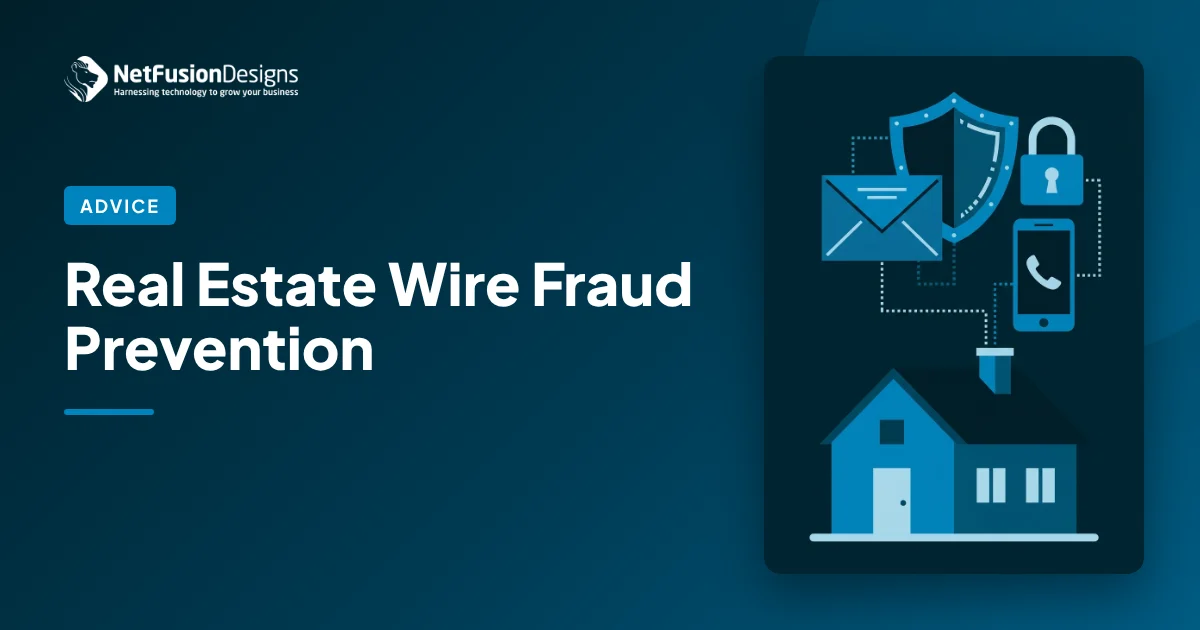
Real estate wire fraud prevention comes down to two things: never trust payment instructions that arrive by email, and make it hard for criminals to get into your inboxes in the first place. Brokerages that verify every change by phone, enforce multi-factor authentication and train agents to spot amended instructions stop most attempts before money moves.
Real estate is an attractive target because deals involve large deposits, many parties, tight deadlines and a lot of email. A criminal who gets into one agent's or client's mailbox can quietly watch a transaction, learn the closing date and the people involved, then send a convincing message with "updated" banking details at exactly the right moment.
This guide explains how the scam works, the process and technical controls that stop it, and what to do in the first hour if a deposit goes to the wrong account. It is written for brokers of record, office managers and agents who want a practical checklist rather than theory.
It is a form of business email compromise where a criminal impersonates someone in a deal to redirect a deposit or closing funds.
The criminal does not need to hack a bank. They only need access to one mailbox in the chain, or a look-alike email address close enough to fool a busy reader. The money is then sent willingly by the buyer, the agent or the office, which is why it is so hard to recover once it is gone.
The target can be a buyer's deposit, a brokerage's commission payment, a referral fee or funds moving between a client and their lawyer. Any payment where instructions are shared by email is exposed.
Most attacks follow the same four stages, and each stage is a chance to stop it.
Our page on real estate IT support for brokerage teams covers how this pattern plays out for mobile agents in more detail.
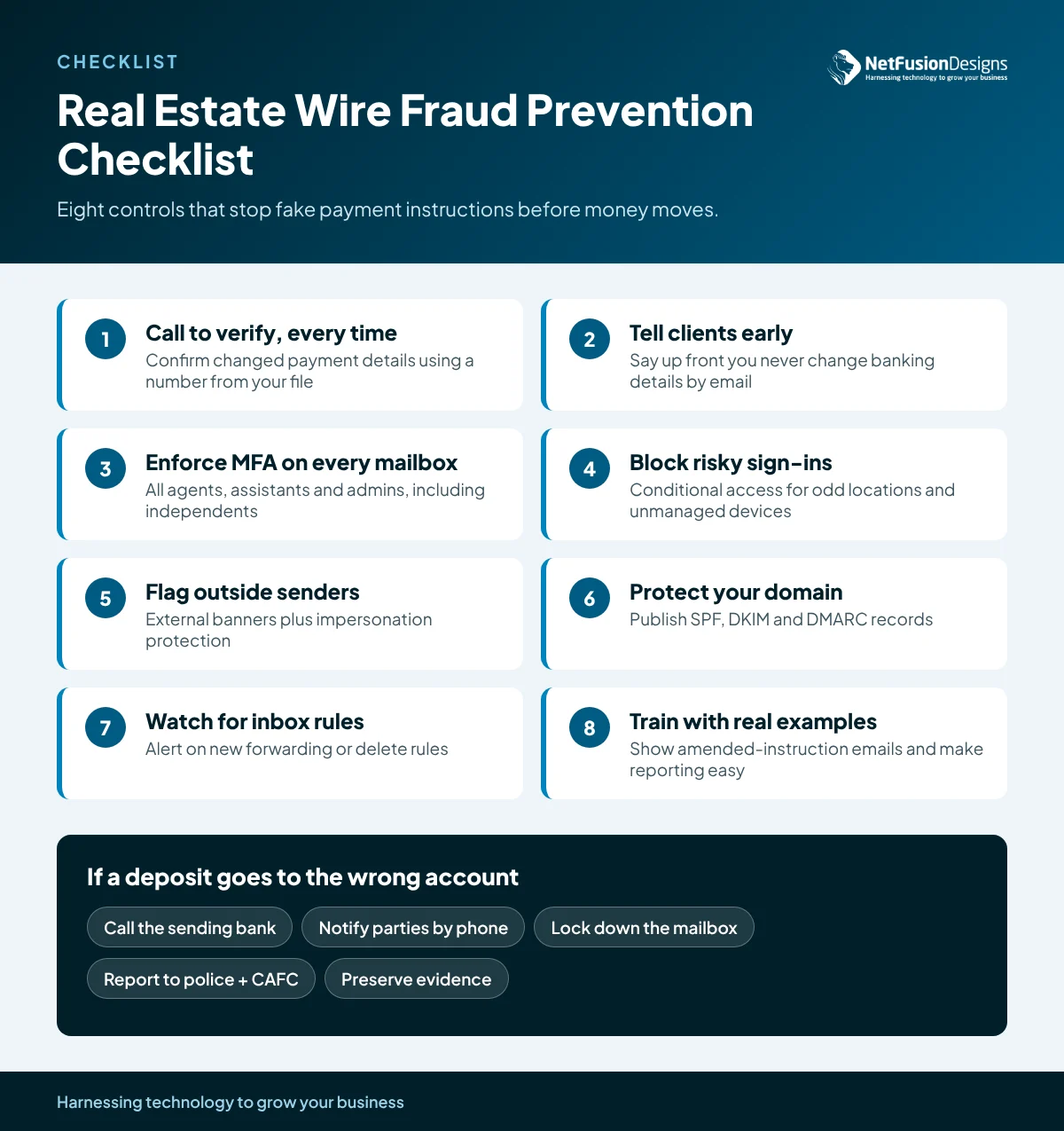
Combine process rules that everyone follows with technical controls that make compromise harder.
Use a phone number you already had, ask a question only the real person can answer, and slow down when there is pressure.
Verification only works if it uses a channel the criminal does not control. Phone numbers in an email signature, a text from an unknown number or a "new" contact in a reply can all be fake. Store verified contact numbers for lawyers, lenders and clients at the start of each deal, and use those.
Treat urgency as a warning sign. Messages that say the old account is "under audit," that funds must move today, or that the sender can't take calls right now are classic pressure tactics. A five-minute call is always cheaper than a lost deposit.
Act within minutes: call the sending bank, then contain the mailbox, then report it.
Having this written down before it happens matters. Our guide to building a cyber incident response plan shows how to turn these steps into a one-page plan.
We put the technical controls in place and help your team follow the process.
NetFusion Designs (NFD), a SOC 2 Type II certified managed IT provider headquartered in Kitchener-Waterloo, supports businesses across Ontario, Quebec and Manitoba. For brokerages, that means MFA and conditional access for every agent, email security with impersonation protection, domain protection, alerts on suspicious mailbox activity and practical staff training. For a broader view of email protection, see our email security best practices, and for sign-in controls, our guide to conditional access policies. The Canadian Centre for Cyber Security's baseline controls for small and medium organizations is also a useful reference.
Real estate deals combine large payments, many parties who don't know each other well, fixed deadlines and heavy use of email. That gives criminals a long window to watch a transaction and a clear moment to strike with fake payment instructions. Mobile agents who work from phones and personal devices can also be harder to protect without central security controls.
Sometimes, but speed matters most. If the sending bank is contacted within minutes or hours, it may be able to stop or recall the transfer before the funds are moved on. After that, recovery becomes much less likely. That is why prevention, and calling the bank immediately when something looks wrong, are far more reliable than recovery.
MFA blocks most password-based mailbox takeovers, but it is not enough on its own. Criminals can still use look-alike domains or trick a client whose own email was compromised. The strongest protection pairs MFA and email security with a firm rule that every change to payment instructions is verified by phone using a known number.
Yes. A compromised mailbox belonging to any agent can expose clients and the brokerage's reputation, whether the agent is an employee or independent. Brokerages should require MFA, approved devices or apps for business email, and the same payment verification process for everyone who handles client transactions under their name.
Wire fraud is preventable with the right habits and a few well-chosen controls. If you'd like help putting them in place across your brokerage, contact the NFD team to talk it through.